How Stably ships AI testing agents in hours, not weeks
How the 6-person team at Stably ships AI testing agents faster with Vercel—moving from weeks to hours. Their shift highlights how Vercel's platform eliminates infrastructure anxiety, boosting autonomous testing and enabling quick enterprise growth.
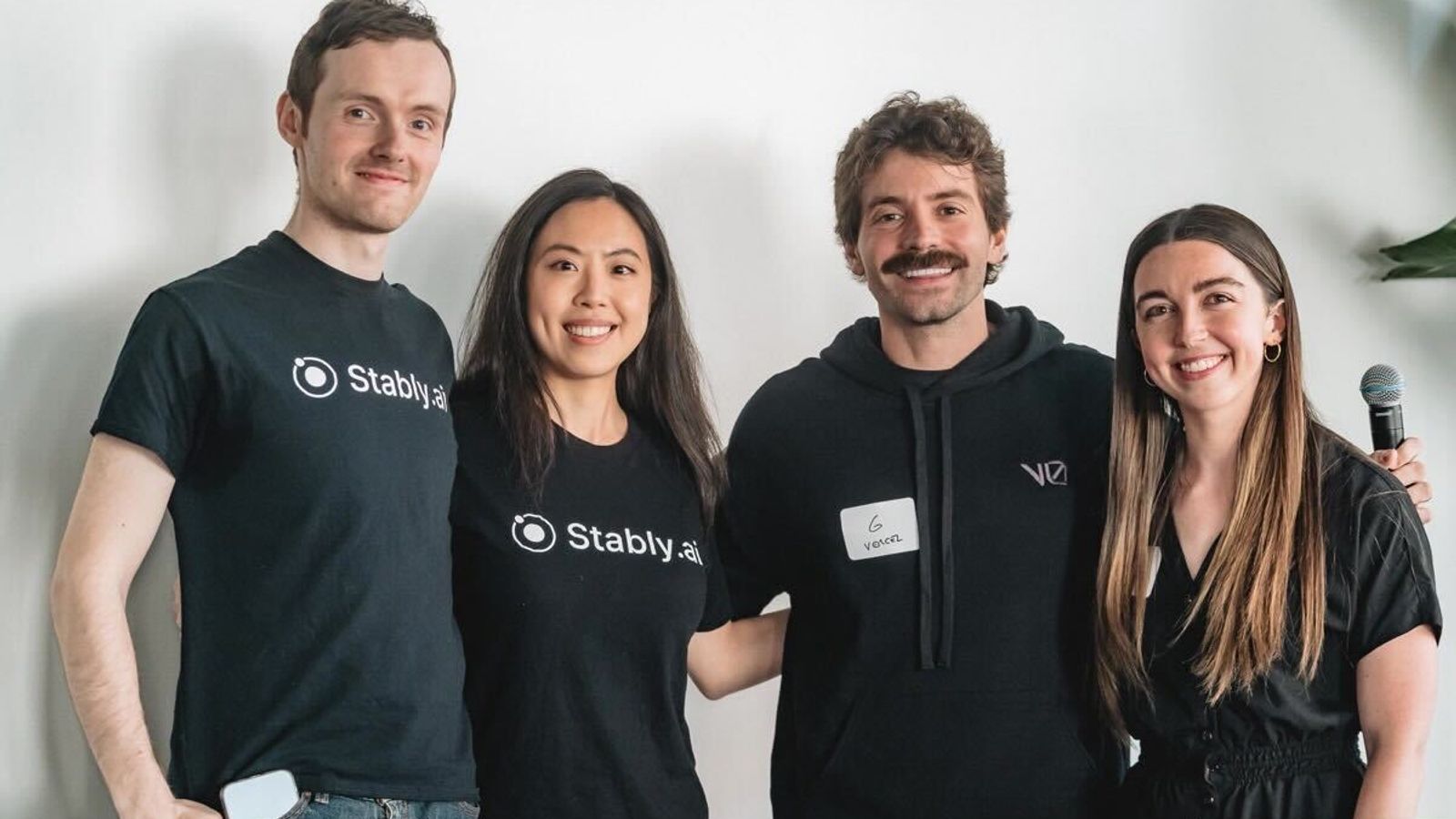
Jinjing Liang, co-founder and CEO of Stably, was building something technically ambitious: AI agents that run autonomous end-to-end tests by deploying on preview URLs, reading code diffs, and validating whether changes actually work. Testing is the bottleneck for autonomous coding: AI can write code fast, but without validation, teams get stuck checking everything manually.
But Stably had their own bottleneck. Every new feature meant infrastructure decisions. Every new agent meant deployment anxiety. For a team of six, that DevOps overhead was unsustainable.
IMPACT AT A GLANCE
- Launch new product lines in hours instead of weeks
- Ship internal tools (Slack bots, dashboards) without worrying about deployment
- Scale from early product to enterprise contracts on the same infrastructure
- Entire stack run by a 6-person team, revenue-generating and lean
THE INFRASTRUCTURE TAX
"Stably is an AI end-to-end testing framework that integrates directly with coding agents like Claude Code," Jinjing explains. "We test the actual application, clicking through it like a real user. Your agents invoke Stably to validate their own work, so you can run them in parallel and ship high-quality features at scale."
Before Stably, Jinjing built infrastructure on the Google Chrome team and her co-founder Neil worked on Uber's safety team. Both had experience shipping systems where small failures had outsized impact. That experience influenced how they approached Stably: reliability was a baseline requirement, even with a small team. They were revenue-generating but running lean, using AI tools wherever possible. They couldn't afford to waste engineering cycles on DevOps.
Their frontend and backend runs on Vercel, leveraging AI Gateway for AI scalability and large TPM limits, and Sandbox for agentic code execution.
Jinjing's team did thorough vendor evaluations for each piece of their stack. But Vercel kept winning. Each time they evaluated alternatives, the calculus was the same: better developer experience, fewer bugs, fewer restrictions, faster feature additions.
“It always happens: Vercel just has the best developer experience, less bugs, less restriction, and we can see they're adding more and more features a lot quicker.”
Her philosophy is simple. "You should just trust the community unless you have a reason not to. Your default should be: I should justify why I shouldn't build on Vercel."
THE CULTURE SHIFT
Something unexpected happened once infrastructure stopped being a decision point. The team's entire operating rhythm changed.
"We used to say, if you see something, say something," Jinjing recalls. "But now we changed it to: if you see something, just do it."
Engineers stopped asking whether deployment would be a blocker, and product ideas turned into shipped features the same day. Internal tools that would have been "someday" projects got built in hours.
Stably built Slack bots that search databases and answer questions, dashboards, and new agents, all on the same Vercel stack. "We're not afraid to launch new products knowing that deployment won't be the blocker," she says.
The team even built internal AI agents that deploy entire services autonomously. "Someone could be like, 'Oh, I really want to add this new product,' and just go ahead, do it. You can do all the DevOps. It's no longer hard to do. And you can also just ask our Slack bot, which is running completely on Vercel, and that bot will go in, build everything for you, and put up a PR for you."